

How Women Can Protect Themselves Against Technology-Facilitated Gender-Based Abuse
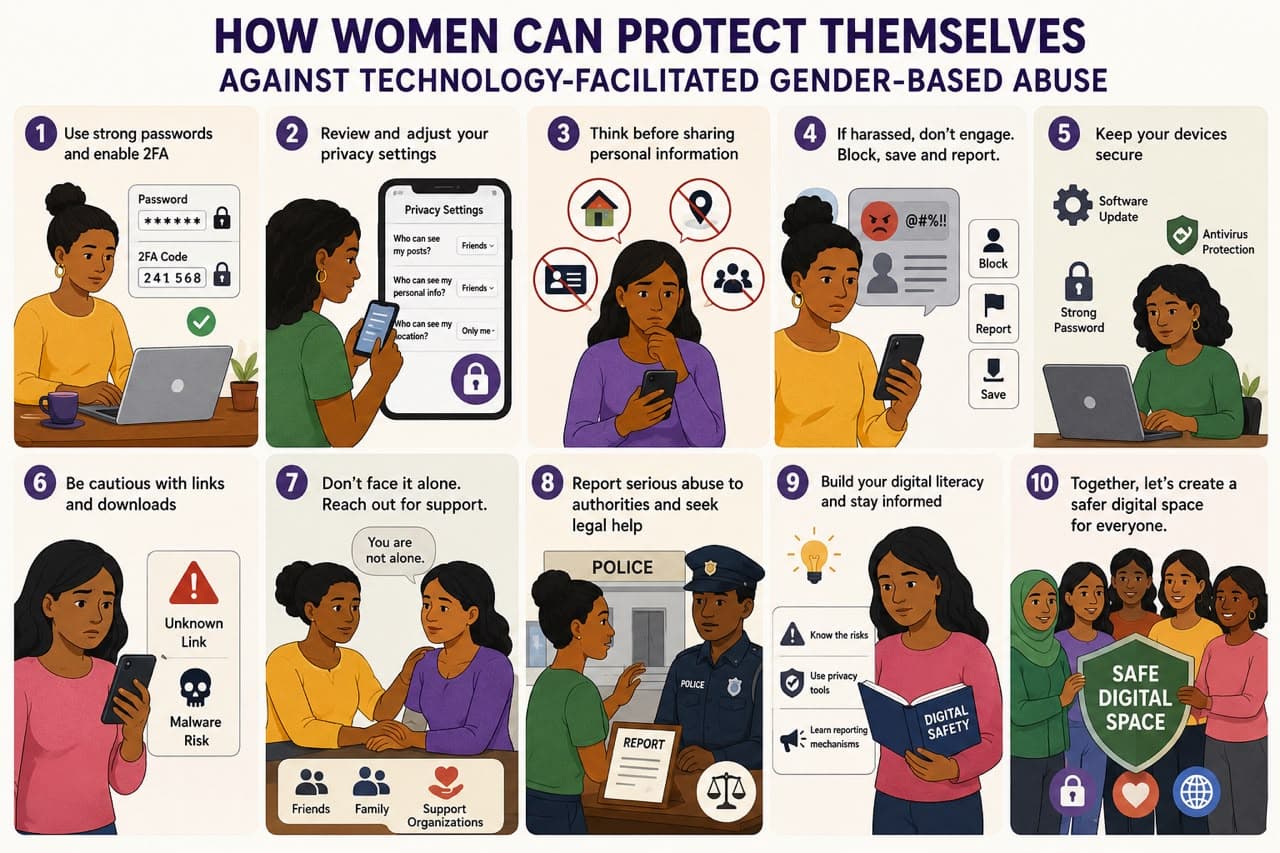
Technology has transformed the way we communicate, work, and connect with others. However, it has also created new opportunities for gender-based abuse. Technology-facilitated gender-based abuse (TFGBA) includes online harassment, cyberstalking, non-consensual sharing of intimate images, identity theft, doxxing, and abusive messages intended to intimidate or silence women. While the responsibility for preventing abuse lies with perpetrators and society, women can take practical steps to reduce their risk and strengthen their digital safety.
First, protect your online accounts by using strong, unique passwords and enabling two-factor authentication (2FA). Avoid sharing passwords with anyone and regularly update them. Second, review your privacy settings on social media platforms. Limit who can see your personal information, location, and posts, and be cautious about accepting friend requests from unknown individuals.
Women should also think carefully before sharing personal details online, such as home addresses, phone numbers, travel plans, or children's information. These details can be misused by abusers to track or threaten victims. If you experience online harassment, avoid engaging with the perpetrator. Instead, block the account, save screenshots and other evidence, and report the abuse to the platform.
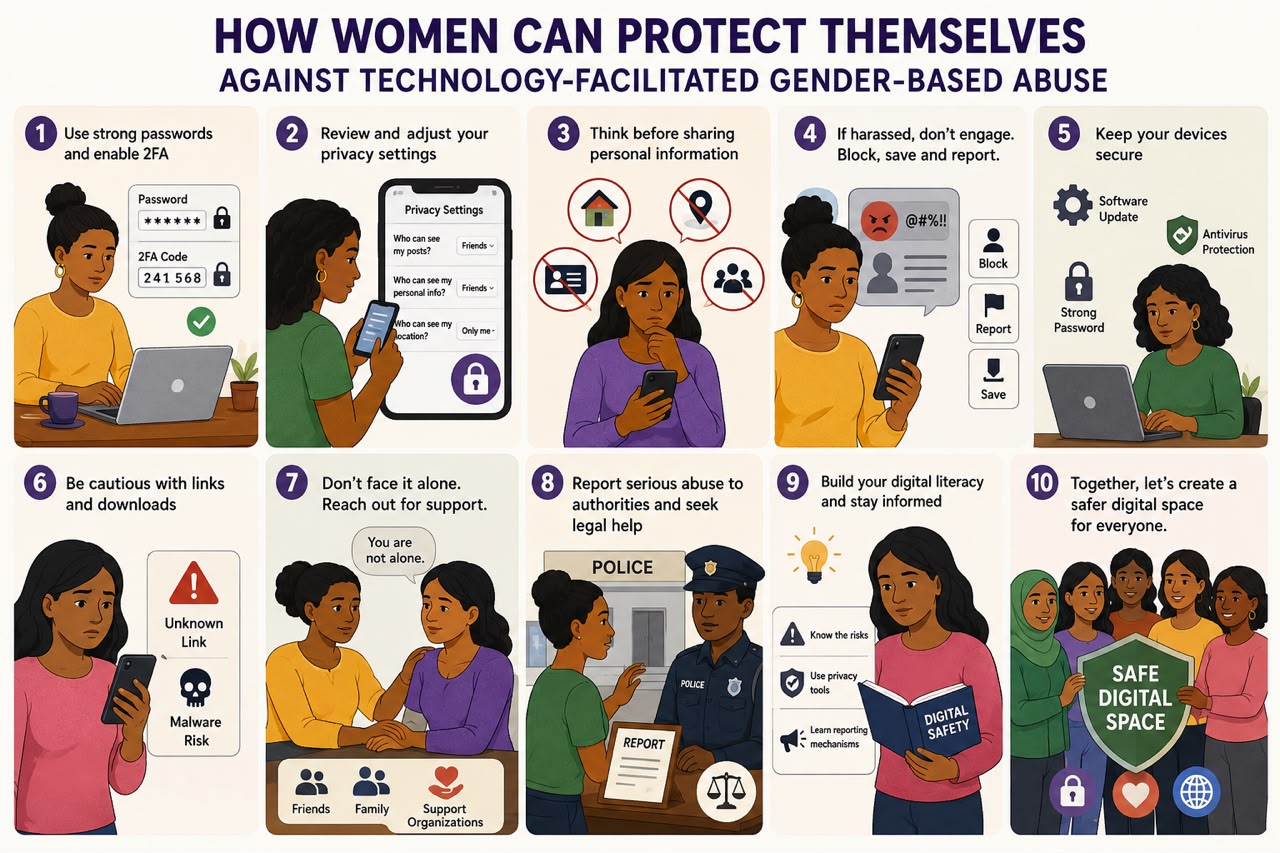
It is also important to keep devices secure by installing software updates and using trusted antivirus programs. Be cautious when clicking unknown links or downloading files, as these may contain malware designed to steal personal information.
No woman should face online abuse alone. Reach out to trusted friends, family members, employers, or organizations that support survivors of gender-based violence. If the abuse includes threats, stalking, extortion, or the non-consensual sharing of intimate content, report it to law enforcement and seek legal assistance where available.
Finally, digital literacy is one of the strongest forms of protection. Learning about online risks, privacy tools, and reporting mechanisms empowers women to navigate the digital world with greater confidence. By combining safe online practices with community support and stronger legal protections, we can create a safer and more inclusive digital space for everyone.